Want visitors to find more than they came for?
Most visitors see the obvious sights and miss the rest. We work with tourism organisations, councils and travel operators to give people something to explore before they go, on the way and when they arrive.
The idea Get day visitors off the beach and into the town’s history

The idea, as a trail
From the sand to the square, in five stops
The idea above as a story, on an imagined stretch of coast. Step along the trail, or pick a stop, to see what appears on the visitor’s phone.
Stop 1 of 5
-
The lost church
It stood here, where the waves are now.
The beach
A building the sea took
Visitors hold up their phone on the sand and the church the sea took rises out of the waves, where it stood.
-
“Every boat in this harbour had a name, and I knew them all.”
The harbour
A voice from the quay
A character from the town’s past tells its story on the quay, with subtitles for anyone without headphones.
-
Collected: the lighthouse
3 of 5 cards
The lighthouse
A card for the collection
Each stop adds a card to the collection, which gives children a reason to reach the next one.
-
Next: the market square
250 m, left at the chapel
The old lanes
The way to the next stop
The phone shows the way and the distance, down streets people would never have walked.
-
Which building did the sea take?
Near you
CaféBookshopGuest house
The market square
A question, then a coffee
A short quiz ends the trail, then the phone shows the cafés and places to stay nearby.
On the ground
History hunts, kings and invisible worlds
We have built trails with tourism organisations, councils and universities across the UK, most on our own geolocation framework.
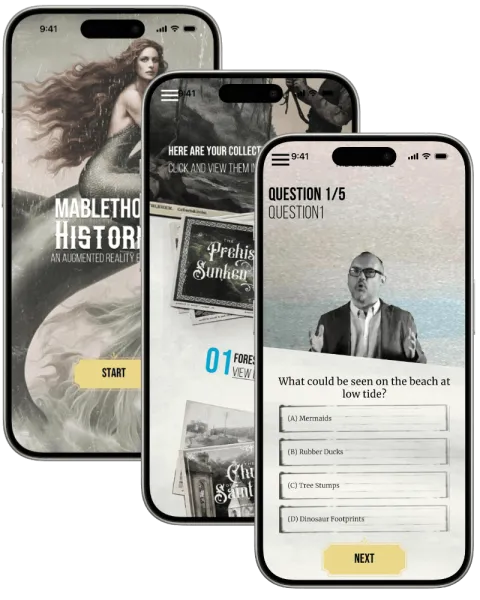
Mablethorpe Histories, made with the University of Lincoln, leads visitors round a seaside town to its hidden histories, from the sunken medieval church to the prehistoric forest, collecting the characters who tell each story.
For Fife’s tourism board we worked with AliveLab on In the Footsteps of Kings. Poster boards at historic sites across the county bring Jess the Jester to life with a task at each, such as firing a cannon. It won the 2019 Innovation Award at the UK Family Attraction Expo.
Invisible Worlds guides walkers round Alderley Edge with soundscapes and AR. At Knebworth House, the view from the Watchman’s Tower shows the estate in five periods, from Saxon to modern.
Mablethorpe Histories, screen by screen
-

Start -

A stop discovered -

Histories collected -

The quiz at the end
The whole trip
The visit starts before anyone arrives.
People choose where to go long before they set off, and the journey can take as long as the stay.
-
Before they go
Try it before booking
A virtual reality preview lets people stand in a place before they book. For Delta Airlines it was the premium cabin, down to a cookie you can smell.
-
On the way
Make the journey part of it
Games, puzzles and virtual worlds on board turn a long crossing or train ride into part of the trip.
-
When they arrive
Show them the rest
Trails and AR scenes lead people past the obvious sights to the stories a place keeps. Walk the example trail.

On the ferry
A whole sea under the hull
For Brittany Ferries we built a virtual reality dive for passengers to take on board. They put on a headset and go below the ship to swim with dolphins and turtles, explore a wreck and meet a blue whale. For many it was their first time in virtual reality.
A second experience now tours the places the ferries sail to in 360, so passengers see the sights before they land.
“The underwater VR activity has been really popular with our passengers, and fits well with our increasing use of tech-driven entertainment.”
On the train
Puzzles between the stations
CrossCountry wanted to keep young travellers entertained and teach them something on the way. Together we built the JourneyMaker app, using gamification.
Children answer puzzles about the places on the route to earn parts for their own train, and a new engine unlocks new journeys. Colouring pages turn into 3D models in augmented reality.
How we work
From the first walk round to the first visitor
-
Walk it with you
We walk the place with you: where visitors arrive, where they linger and which stories the town already tells.
-
Build the stops
Our designers, 3D artists and developers make each scene and character, and you try them on site as they come together.
-
Keep it current
You change stops in one system and see which places people visit most, and we add to it with you.
-
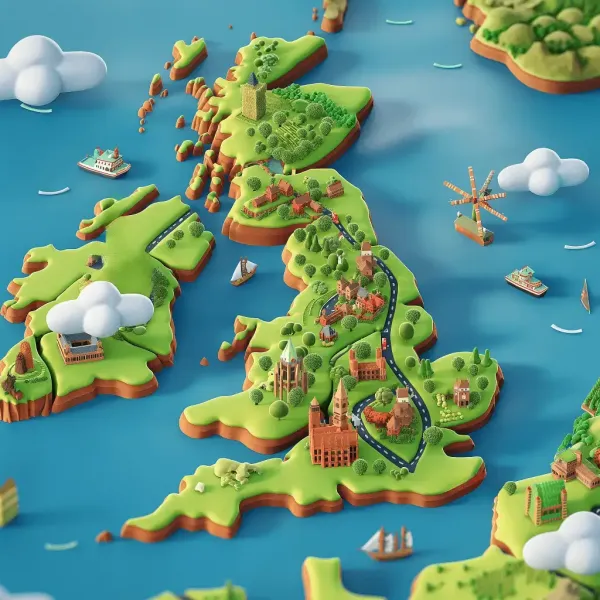 Case study
CrossCountry Journeymaker App
We partnered with CrossCountry Trains to create JourneyMaker, a free AR app packed with fun activities for young travellers. From...
Read the story
-
 Case study
Delta Airlines
A fully immersive virtual reality experience including virtual reality cookie that you can pick up and even smell (it’s about as c...
Read the story
-
 Case study
Mablethorpe Histories
Experience Alderley Edge like never before this innovative mobile app. Using advanced geolocation technology, the app enhances you...
Read the story
-
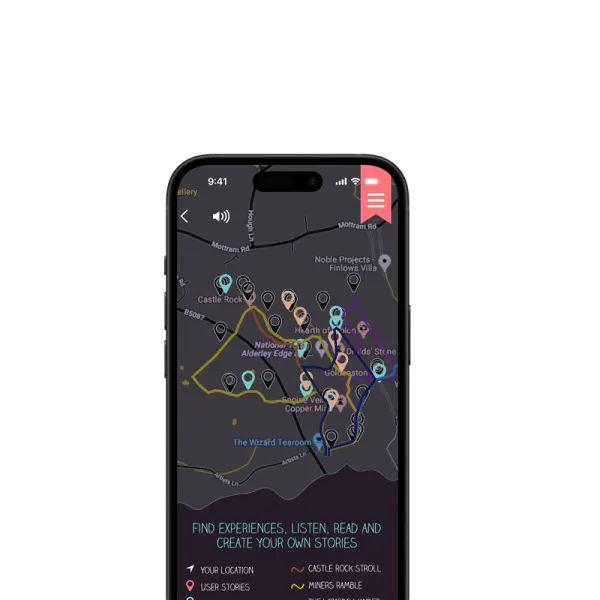 Case study
Invisible Worlds
Experience Alderley Edge like never before this innovative mobile app. Using advanced geolocation technology, the app enhances you...
Read the story
-
 Case study
In the Footsteps of Kings
Take a magical journey across Fife using augmented reality and follow the footsteps of past Kings and Queens.
Read the story
-
 Case study
Knebworth House
Bring history to life with this new offering at Knebworth House.
Read the story
What we use
The mediums that fit
Most projects in this sector mix two or three of these, chosen with you.
-
GeoLocation and Marker Experience (GLME)
A building on a screen is a picture. Tied to the plot it will stand on, or to a printed marker, it becomes something people can stand in. GLME, our geolocation and marker framework, shows the right content when someone reaches a spot or points their phone at a marker, and lets you change it all from one system.
-
Augmented Reality Development
Some things are easier to judge, buy or learn when they are in the room at the right size. Augmented reality puts them there through the camera of a phone or tablet, so people can walk round them.
-
Virtual Reality Development
Some places cannot be visited yet, are too risky to practise in or are simply too far away. Virtual reality puts people inside them at full size, wherever they happen to be.
-
Gamification
Your training is built and you can see how people use it. Now you want them to finish it, and to go again for a better result. Gamification gives them a reason to.
-
360 Video Production
Sometimes people need to be there to understand it: at the launch, on the site or in the room where the job is done. 360 video films every direction at once, so your audience can look wherever they like, on a phone, in a browser or in a headset.
-
3D Modelling and Animation
A product still in design, a mechanism hidden inside a machine or a character that only exists as a sketch is hard to show with a camera. We model and animate it with you, so people can see what it looks like and how it works.
-
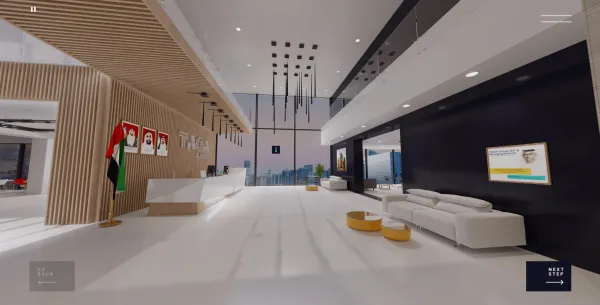 13 July 2026
Walk the building before it exists
A browser-based tour of a site that doesn't exist yet, built from your existing models and drawings, lets stakeholders explore it,...
Read
-
 4 September 2025
Apple Immersive Video Production: Harmony’s Guide to 8K 3D VR Content
Learn how Apple Immersive Video is pioneering a new era of 8K 3D content, bringing this revolutionary format to life for major int...
Read
-
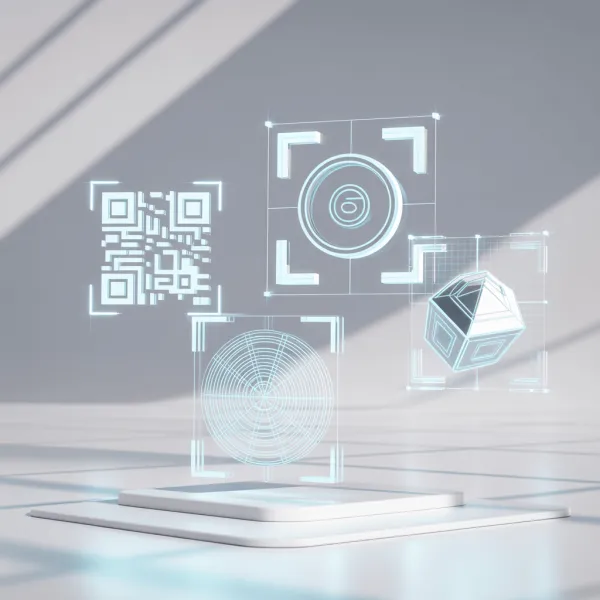 15 May 2025
Decoding the Digital Overlay: A Guide to AR Tracking Technologies
This article provides a clear and detailed guide to the various AR tracking technologies that enable immersive augmented reality e...
Read
Questions
Good to know
-
Do visitors need to download an app?
Usually, yes: our trails so far are apps for Apple and Android phones. The geolocation framework also runs in a web browser, so we can decide with you which suits your visitors.
-
Does a trail need signs or markers at each stop?
No. A stop can open when someone walks into the area, or when they scan a poster or sign, as the Fife trail does.
-
Can we change the stops after launch?
Yes. Stops, copy and activities are managed in one system, which also shows which places people visit most.
-
Can people enjoy it without visiting?
Some of it. Invisible Worlds has life-size AR portals people can step into at home, and Mablethorpe Histories keeps the characters people collected so they can watch them again later.
Your idea
Talk it through with us
Tell us what you are trying to explain, launch or change in your sector. We will work out with you which medium suits it.
Other sectors
Who else we work with
-
Training & Education
Some equipment is too big, too busy or too risky to practise on, and a page of instructions only gets people so far. We build training with you that staff, students and new starters can see, try and repeat.
-
Consumer
Then let the screen join in. A toy, a book, a pack or a poster can come alive when someone points a phone at it, and together we make what appears.
-
Entertainment
People have more to watch, play and visit than they have time for. We help attractions, broadcasters and event teams give them something to do, so they stay longer and come back.
-
Healthcare
Healthcare stories are told to patients, to clinicians and by the people who sell to them, and every word has to be right. Together, we turn approved science into something people can see, turn round and follow.
-
Industrial
Industrial products are big, heavy and complicated, and the parts that matter are usually inside. We work with you to put them on a desk, in a browser or in a headset, opened up and working, wherever your buyers and your team are.
-
Retail
A photo cannot tell a shopper whether something will fit, suit them or go with their room, and a shopping centre has to give people a reason to make the trip. We work on both with you.
Your turn
What’s your idea?
Tell us the idea you are trying to explain, launch or change, and together we will find the right way to tell it.