Need a group to walk round it together?
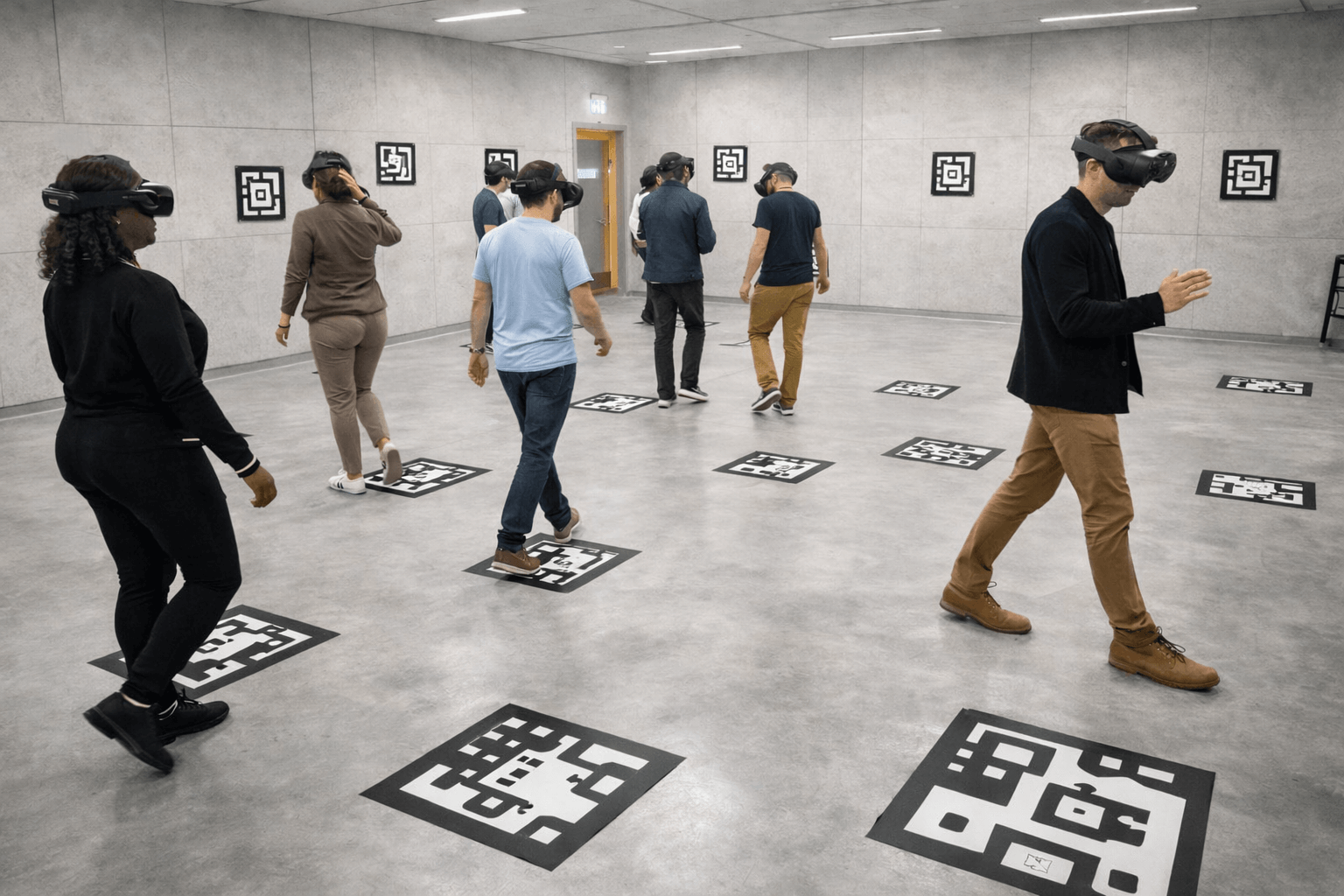
Some experiences are better shared. Location-based VR maps a room in your venue to a virtual world, so a group can walk through it at the same time and talk about what they find.
The idea Let people walk round the new building before it is built
Plan the space
It starts with the floor, not the headset.
Location-based VR is built round a real room. Before anyone designs a world, we work out the space with you.
-
Floor area
Every step on the floor is a step in the virtual world, so the room and the story have to fit each other. We measure your footprint with you and size the experience to it.
-
Visitor flow
People arrive, are fitted with a headset, play, hand it back and leave. We plan that route with you so groups never cross and your team can run it.
-
How many go through
While one group plays, the next is briefed and fitted. Sessions that overlap keep people moving without cutting the story short.
What it is
Not the virtual reality you have at home
Location-based VR is virtual reality designed for a venue rather than a living room. Instead of standing in one place, people walk through a real space that has been mapped to a shared virtual world.
Because the room and the world line up, people move naturally, reach for what they see and explore it side by side. It feels more present than a headset at home, and it is shared.
| Location-based VR | Free-roam VR | Home VR | |
|---|---|---|---|
| Where it happens | In a venue: an attraction, a museum, an event or a training space | In a venue, across an open area mapped to the virtual world | At home, or wherever one person has a headset |
| How people move | Through a real space laid out to match the virtual one | Untethered, walking freely through the whole area | Standing or sitting in one spot, sometimes on a cable |
| Who is inside | Several people in the same session | A group, each tracked, all seeing the same world | Usually one person |
| What it covers | The wider category: every format built for a venue | The most common kind of location-based VR | One headset and one player |
What makes it work
A good venue experience is more than headsets.
The room, the tracking and the story have to work together. We design for these six with you from the first sketch.
-
Movement that feels natural
People walk, turn and reach without being taught how.
-
A story you can see
The world tells it, so a group follows without stopping to read.
-
Every headset in step
Everyone sees the same moment, however many are inside.
-
Easy for your team to run
Fitting headsets, starting sessions and resetting between groups are designed in.
-
Worth coming back for
Choices and missions that play out differently each time.
-
An outcome you can name
Agreed with you at the start: what it is for and how you will know it worked.
By venue
Where a shared world earns its floor space
-
Theme parks and attractions
Story-led adventures and missions that groups queue for, talk about and come back to try again.
-
Museums and heritage
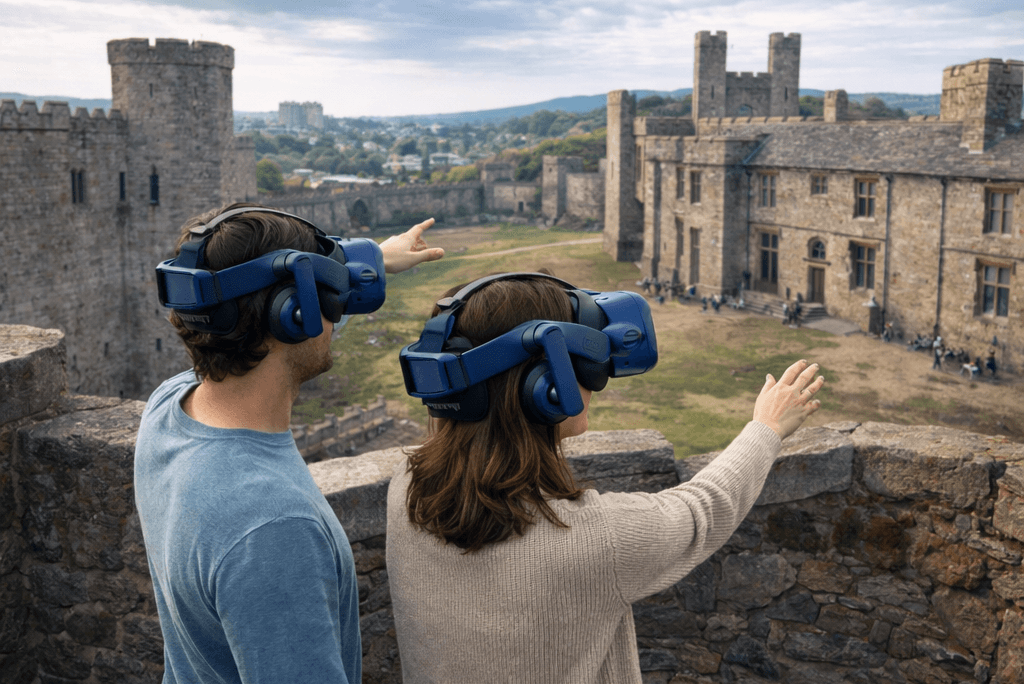
Put visitors inside a moment from history or a place they could never reach.
-
Family entertainment centres
Short, high-energy sessions for groups, built to run again and again.
-
Launches and events
A world people physically step into, explore together and tell others about.
-
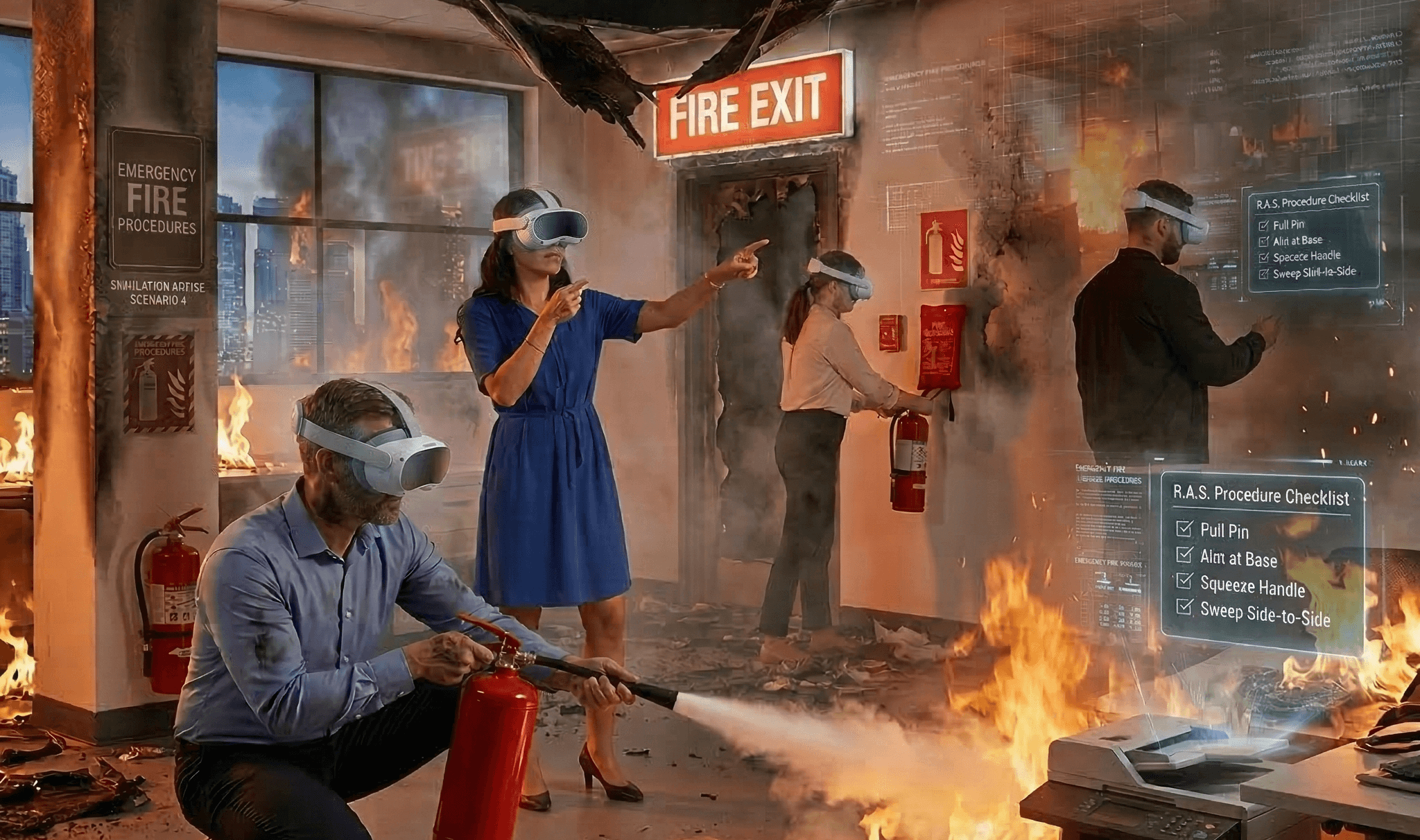
Training and education
A realistic shared space where a team practises together before the real thing.
How we work
From your floor plan to opening day
-
Start with the room
We begin with your audience, your venue and what the experience is for, then plan the floor, the flow and the numbers with you.
-
Build the world
Our designers, 3D artists and animators make the places, characters and interactions. You walk through them as they take shape.
-
Make it work for a group
Our developers build for wireless headsets and many people at once, with every headset kept in step in real time.
-
Test it, open it, keep it running
We test with you for comfort, reliability and ease of running, then support the opening and the changes after it.
Questions
Good to know
-
Is location-based VR the same as free-roam VR?
Free-roam VR is the most common kind: people walk untethered through a mapped space. Location-based VR is the wider category and also covers other formats built for a venue.
-
How much space do we need?
It depends on the story, the size of each group and how many need to go through. We look at your floor and visitor flow with you early, and shape the experience to fit.
-
Who uses location-based VR?
Theme parks, museums and heritage sites, attractions, family entertainment centres, events and training providers: any organisation that wants a group to share one experience.
-
Can you help with both the concept and the build?
Yes. We work with you from the first concept and floor plan to opening day and the changes that follow.
-
We have a venue but are not sure what is possible. Can you help?
Yes. Tell us about the space and who visits it, and we will work out with you what would fit, whether that is location-based VR or something else.
Your idea
Talk it through with us
Tell us what you are trying to explain, launch or change. We will work out with you whether this is the right medium for it.
Also in Immersive Experiences (XR)
Other ways to tell it
-
Augmented Reality Development
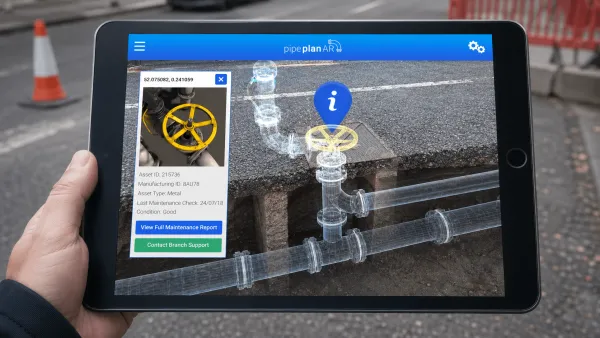
Some things are easier to judge, buy or learn when they are in the room at the right size. Augmented reality puts them there through the camera of a phone or tablet, so people can walk round them.
-
Virtual Reality Development
Some places cannot be visited yet, are too risky to practise in or are simply too far away. Virtual reality puts people inside them at full size, wherever they happen to be.
-
WebXR
Plenty of people will not install an app to look at one product. WebXR runs 3D and augmented reality in the browser they already have, so a link, a printed code or a button on your product page is all it takes.
-
GeoLocation and Marker Experience (GLME)
A building on a screen is a picture. Tied to the plot it will stand on, or to a printed marker, it becomes something people can stand in. GLME, our geolocation and marker framework, shows the right content when someone reaches a spot or points their phone at a marker, and lets you change it all from one system.
Your turn
What’s your idea?
Tell us the idea you are trying to explain, launch or change, and together we will find the right way to tell it.