Does the place matter as much as the product?
Sometimes people need to be there to understand it: at the launch, on the site or in the room where the job is done. 360 video films every direction at once, so your audience can look wherever they like, on a phone, in a browser or in a headset.
The idea Let customers see our new product before it exists
Try it yourself
Stand where the camera stands.
Scroll the picture sideways to look round the room.
Facing the stage
-
The stage
The new product on its turntable. A flat film would cut to it; here the viewer turns to it.
-
The audience
Everyone in the room is in the picture, so remote viewers see the reaction too.
-
The stream desk
Where the live picture goes out to YouTube or Vimeo. Everything round the camera is in shot, crew included.
-
The river
The view your guests came for. When the place is part of the story, it stays in shot.
What it is
There is no frame. The viewer chooses where to look.
A 360 camera records every direction at once. Instead of watching someone else’s framing of a place, the viewer looks round it: by turning their head in a headset, moving their phone or dragging with a mouse.
People stop watching and start exploring, so they stay with it longer and remember where they were.
It suits anything where being there is the point: a property to walk round, a destination to try before booking, a lesson somewhere a class cannot go, a concert or a conference.
Our 360 reel
On the river, on stage and in the air
Places we have taken a 360 camera, edited as “little planets”: the whole sphere folded into one round world.
When it fits
Being there is the point.
-
They cannot get there
A venue, a site or a destination that is far away or closed. In a 360 tour people look round, move between spots and open points that tell them more.
-
They need to feel it
With Unseen we made four 360 films about modern slavery, each following one person, with animation showing what they think.
-
They cannot be in the room
A conference, a concert or a launch, streamed live in 360, so people watching remotely choose where to look.
Training on location
A job you cannot practise on site
New staff at the NCC could not site a caravan without a qualification, or gain the experience without siting one. Together we filmed a real siting from start to finish in 8K.
It became a headset course in eight short sections over two days, with voiceover, step-by-step graphics and close-ups. Our synchronised playback lets the trainer play, pause and move every headset on together.
How we work
From the first walk round to the first viewing
-
Plan where the viewer looks
With no frame to cut to, we plan the story with you around the viewer: where the camera stands and what draws the eye.
-
Film the whole scene
We film with you on location in high resolution, recorded for later or streamed live as it happens.
-
Finish it and share it
We finish the film, review it with you on the screens it is made for, then publish it.
After the shoot
From the camera to the screen
Much of a 360 film is made after the camera stops, in four stages we go through with you.
-
Stitching
A 360 camera films through several lenses. Stitching joins their pictures into one sphere with no visible seam.
-
Colour grading
Each lens sees the light a little differently. Grading matches them, then sets the look of the whole film.
-
Sound
Voiceover, music and the sound of the place itself, designed and mixed with the picture.
-
Effects and animation
Labels, step-by-step graphics and animation placed inside the scene, even things a camera could never film.
Where it plays
We publish it with you and check it plays well on every screen.
| Where | How people look round | Good for |
|---|---|---|
| Headsets | Turning their head | Training, and stories told from inside the scene |
| Phones and apps | Moving the phone or dragging a finger | Tours and films in your own app |
| The web | Dragging with the mouse | Tours on your own website |
| Live on YouTube and Vimeo | Any of the above, while it happens | Conferences, concerts and launches |
-
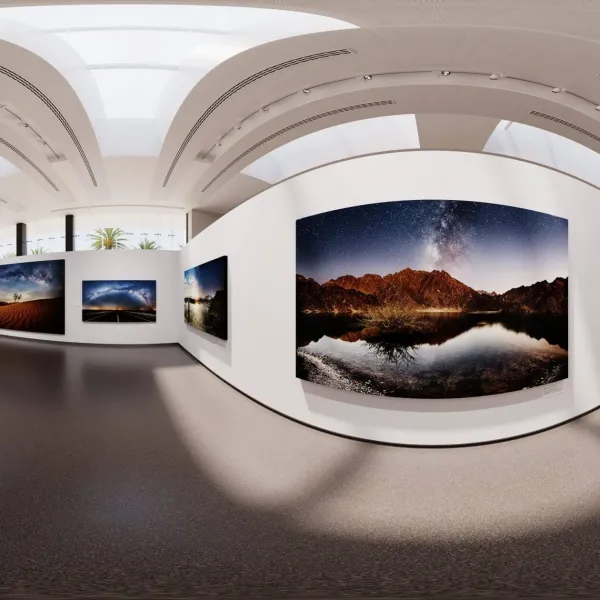 Industrial
360 Web Tours in VR
It is now easier than ever to create an interactive tour online. Users can explore locations and interact to learn more about spec...
Read the story
-
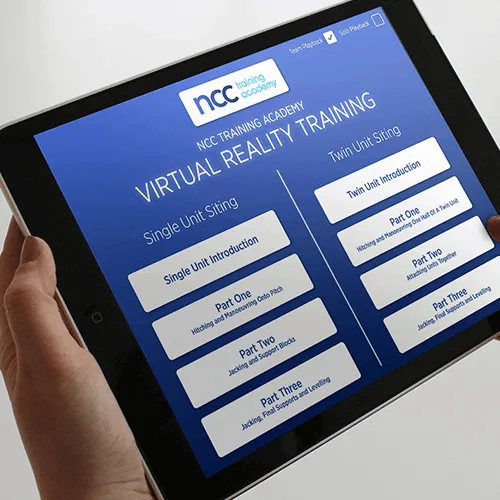 Training & Education
NCC
NCC are transforming training standards with this immersive health and safety training experience.
Read the story
-
 Unseen
We have created a series of short VR films educating the public around modern slavery in Great Britain.
Read the story
Questions
Good to know
-
Do viewers need a headset?
No. 360 video plays in a browser and on phones, where people look round by dragging or moving the phone. A headset gives the most immersive view.
-
Can you stream an event live in 360?
Yes. We stream conferences, concerts and launches live in 360 to YouTube and Vimeo, and remote viewers choose where to look as it happens.
-
Can a trainer take a whole group through it at once?
Yes. Our synchronised playback lets a trainer play, pause and move every headset in the room on to the next section together.
-
How is 360 video different from Apple Immersive Video?
360 video wraps one flat picture all the way round the viewer, which works on phones, browsers and most headsets. Apple Immersive Video covers 180 degrees in 3D, with a separate view for each eye, so the scene has depth.
Your idea
Talk it through with us
Tell us what you are trying to explain, launch or change. We will work out with you whether this is the right medium for it.
Also in Content & Production
Other ways to tell it
-
3D Modelling and Animation
A product still in design, a mechanism hidden inside a machine or a character that only exists as a sketch is hard to show with a camera. We model and animate it with you, so people can see what it looks like and how it works.
-
Apple Immersive Video
A flat film shows a place or a product from across the room. Apple Immersive Video films it in 8K 3D across 180 degrees for Apple Vision Pro, so it stands in front of the viewer with real depth and sound all round.
Your turn
What’s your idea?
Tell us the idea you are trying to explain, launch or change, and together we will find the right way to tell it.