For many businesses, the cost of machinery downtime is not just the repair itself. It is the lost output, the delayed response, the engineer call-out, and the knock-on effect on service, production, or customer experience.
In a lot of cases, the issue is not that a fault is too complex. It is that the right guidance is not available quickly enough.
The machine is there. The operator is there. But the knowledge needed to diagnose or fix the issue is somewhere else, in a manual, with a specialist, or tied up in a support process that takes time.
That delay costs money.
This is where augmented reality is becoming commercially useful. AR gives people guidance at the point of need. Instead of taking training away from the machine, it brings support to the machine itself. That can mean visual instructions, guided maintenance steps, clearer fault-finding, and a better understanding of how equipment works in practice.
The result is simple. When people can solve routine issues faster and more confidently, businesses reduce downtime, avoid unnecessary call-outs, and make better use of engineering resource.
That is why the real value of AR is not novelty. It is operational efficiency.
A strong AR approach can help in four areas.
First, it reduces downtime. If an operator or site team can identify a problem and work through the first steps immediately, equipment can often be returned to service faster.
Second, it cuts engineer call-outs. Not every issue needs a specialist visit. Many first-line faults and maintenance tasks can be handled internally if the support is clear enough.
Third, it improves training consistency. Across multiple sites, shifts and teams, AR creates a more repeatable way to train people, helping them learn in context rather than relying on memory or static manuals.
Fourth, it frees up expert time. Senior engineers are then able to focus on complex issues and improvement work rather than repeatedly solving avoidable day-to-day problems.
We have seen this in practice at Harmony.
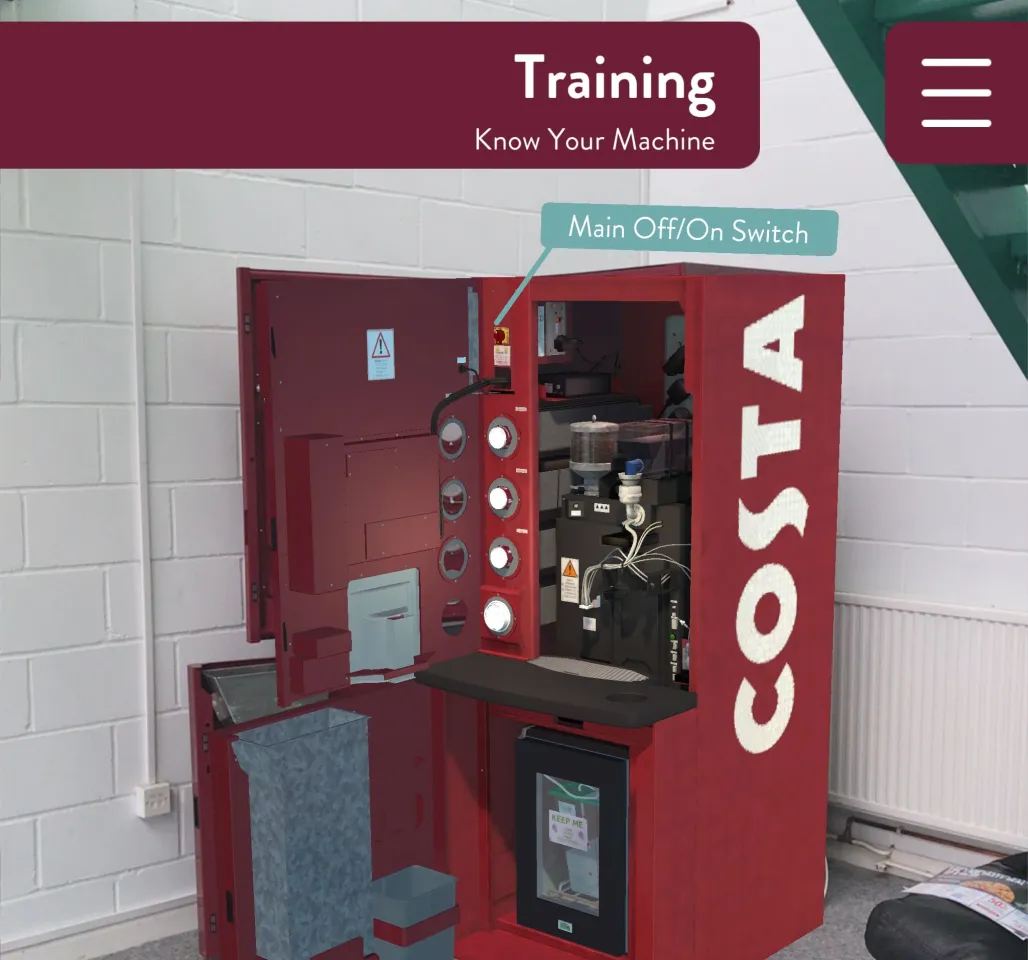
With Costa Express, the challenge was supporting a very large estate of machines across retail locations and shift patterns. Harmony’s AR support app was designed to provide accessible training, key maintenance procedures and error diagnosis in one place, helping staff build confidence and independence while also giving visibility of training progress through an online platform. Costa Express machines are used by partners including Tesco, BP, Sainsbury’s, Co-op and Waterstones, with more than 8,000 machines across the UK.
That matters because it gets to the heart of the business case. When support is easier to access and easier to apply, the cost of maintaining uptime starts to fall.
The same principle was clear in Harmony’s work with Sealed Air. In the Intellicare project, the aim was to reduce the cost of supporting products used by major global brands while increasing effectiveness. The solution combined product recognition, visual and interactive training, personal training records, and a troubleshooting route linked to online support systems for regional issues. It actually went on to win an award, as explained by Marc Robitzkat from Sealed Air.
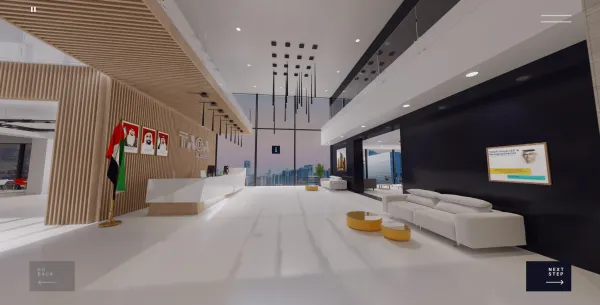
In the TASKI BOT project, the focus was on helping users explore the features and benefits of the TASKI Swingobot 2000 floor care machine through interactive content, animated operational sequences and a 360-degree virtual reality experience. That is a good reminder that when people can see how equipment works, they are more likely to use and support it correctly.
And in Harmony’s Cummins project, AR was used to help users visualise, compare and explore products, understand components and watch video demonstrations. Harmony also notes that using AR to display products and functions in 3D can significantly reduce training and troubleshooting costs by giving users an experience closer to face-to-face training.
What links these examples is not just the technology. It is the shift in how knowledge is delivered.
Instead of expecting people to stop, search, interpret and then act, AR supports them in context. That makes maintenance smarter, troubleshooting faster, and training more useful.
For businesses, that means lower support costs, less avoidable downtime, and better protection of revenue.
For teams, it means more confidence, more consistency, and less reliance on reactive support.
That is why I believe AR is becoming one of the more practical tools in machinery maintenance. Not because it looks impressive, but because it helps people do the job better, faster and with less friction.
And when uptime matters, that has a direct commercial value.
Where do you see the greatest avoidable cost today: downtime, engineer call-outs, or inconsistent training?
-
Kieran Sawyer has over 15 years of experience helping clients shape innovative digital and immersive solutions. He leads on strategy, combining commercial insight with creative technology to deliver impactful experiences.
Profile -
Date
Mar 24, 2026
-
Reading time
14 min read
-
Sectors
Training & Education
Industrial
Retail
-
Services
Augmented Reality Development
WebXR
Immersive Technologies
3D Modelling and Animation
-
Related work
Costa
Sealed Air: Intellicare
TASKI BOT

Max 500 characters (0/500)