Need to update it without a new app release?
Most apps and experiences need a system behind them to change the content, manage who has access and keep the data safe. Edit something once in a web system we build with you and every device shows it.
The idea A virtual reality training experience for our teams

Try it
Change it once. See it everywhere.
A content management system sits behind the app. Your team edits a module there, and phones, headsets and browsers show it the next time they open it. There is no new release to send through the app stores.
Module 03
Working at height
For New starters
Module 03
Working at height
For New starters
Module 03
Working at height
For New starters
Behind the app
Easy for the people who run it
The web system is the part nobody sees, and the part your team uses every week. Most apps need one: it holds the content, decides who can log in and keeps the data people create. For virtual reality training, it is where you add a module, give a new starter access and see who has finished what.
We design it so people with no technical background can reach their goal. The layout adjusts to a phone, a tablet or a desktop, pages load quickly, and clear buttons and signposting show the next step. It follows web accessibility standards so everyone can use it.
We gather your requirements with you, then keep a cycle of feedback going after launch so new features come from how people actually use it.
Made to fit
Dashboards, roles and workflows, shaped to you
Every organisation runs differently. We work with you to understand how yours does, then build the system round it.
-
Custom dashboards
The numbers your team needs, in one place, from user behaviour to what people prefer. They help you decide with evidence.
-
User roles
Learners, managers and administrators each see what they need and nothing more.
-
Content workflows
Decide who drafts, who checks and who publishes, so new content reaches people the way your organisation works.
How we work
From first idea to a system that lasts
-
Agree what it must do
We gather your requirements with you: who logs in, what they change, what they need to see and which systems it talks to.
-
Build and test it together
Our developers build it in stages with tests and version control, and you use each stage and tell us what to change.
-
Keep improving it
We deploy it, apply security updates and add features with you through a steady cycle of feedback.
Built to last
Systems that are still running years later.
We follow industry-standard processes and coding styles, so a system is modular and easy to update and extend. Some we first deployed nearly a decade ago still work today and are updated whenever clients ask for something new.
-
Version control
Every change to the code is recorded, so we can see what changed, when and why, and step back if we need to.
-
Documentation
The system is written up as it is built, so the next developer, ours or yours, can pick it up.
-
Automated deployment
New versions go live by the same steps every time, which keeps updates quick and cuts the mistakes made by hand.
-
Automated tests
Tests run on every change and catch bugs before your users do. Fewer bugs also means less to fix later.
-
Security
Encryption, secure authentication and data validation protect what people enter. Regular audits and security patches keep it that way.
-
Data protection
Personal data is handled under UK GDPR. We agree with you what is collected and who can see it.
Data and new tools
Ready for what you add next

Technology changes, and a system has to take new tools in without a rebuild. We design ours to connect to cloud services for scale and to artificial intelligence integration, such as predictive analytics.
We build web applications mostly in Laravel, with Python where a large dataset needs processing. Our HDF5 data visualisation project shows both at work: large data files stored and drawn in 3D.
Technologies we use
-
 Training & Education
Costa
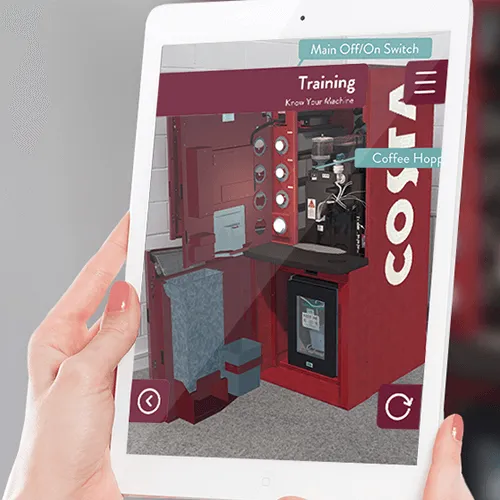
Costa is providing accessible and intuitive training and troubleshooting using augmented reality.
Read the story
Training & Education
Costa
Costa is providing accessible and intuitive training and troubleshooting using augmented reality.
Read the story
-
 Industrial
Centrica Business Solutions WebXR
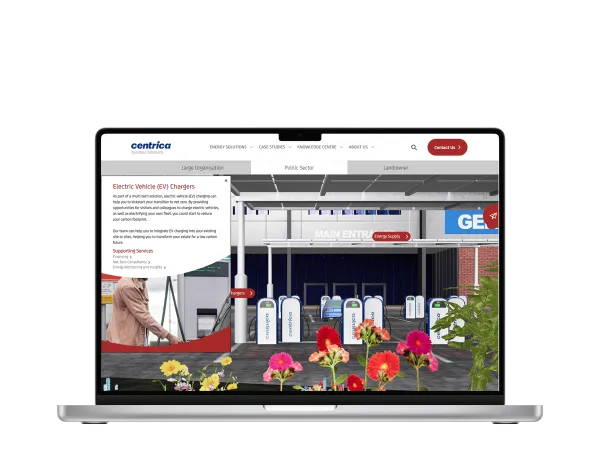
Discover sustainable energy solutions with Centrica Business Solutions’ immersive 3D WebXR experience, crafted by Harmony Studios....
Read the story
Industrial
Centrica Business Solutions WebXR
Discover sustainable energy solutions with Centrica Business Solutions’ immersive 3D WebXR experience, crafted by Harmony Studios....
Read the story
-
 Training & Education
Unity WebGL HDF5 Data Visualisation Tool
Take a magical journey across Fife using augmented reality and follow the footsteps of past Kings and Queens.
Read the story
Training & Education
Unity WebGL HDF5 Data Visualisation Tool
Take a magical journey across Fife using augmented reality and follow the footsteps of past Kings and Queens.
Read the story
Questions
Good to know
-
What do you build web systems with?
Mostly Laravel, with Python where large datasets need processing. The code is version controlled, documented and tested, so it is easier to update and extend.
-
Can we change the content ourselves?
Yes. A content management system lets your team add or edit content and push notifications, and people see the change in the app without a new release through the app stores.
-
How do you look after personal data?
Systems are built with encryption, secure authentication and data validation, and personal data is handled under UK GDPR. We agree with you what is collected and who can see it.
-
Will it work on phones and tablets?
Yes. The interfaces are responsive and follow web accessibility standards, so people can use them on the device they have.
-
Can we add to it later?
Yes. Systems are built in modules so new features can be added when you need them, and we keep working on them with you after launch.
Your idea
Talk it through with us
Tell us what you are trying to explain, launch or change. We will work out with you whether this is the right medium for it.
Also in Digital Solutions
Other ways to tell it
-
Gamification
Your training is built and you can see how people use it. Now you want them to finish it, and to go again for a better result. Gamification gives them a reason to.
-
Artificial Intelligence integration
AI lets an app, headset or web system recognise what a camera sees, understand what people write and find patterns in data. In your training experience, it could recognise the kit a trainee points at.
-
Experience Analytics
Your virtual reality training is live. Now you need to know who finished it, how they scored and which part held people up.
Your turn
What’s your idea?
Tell us the idea you are trying to explain, launch or change, and together we will find the right way to tell it.