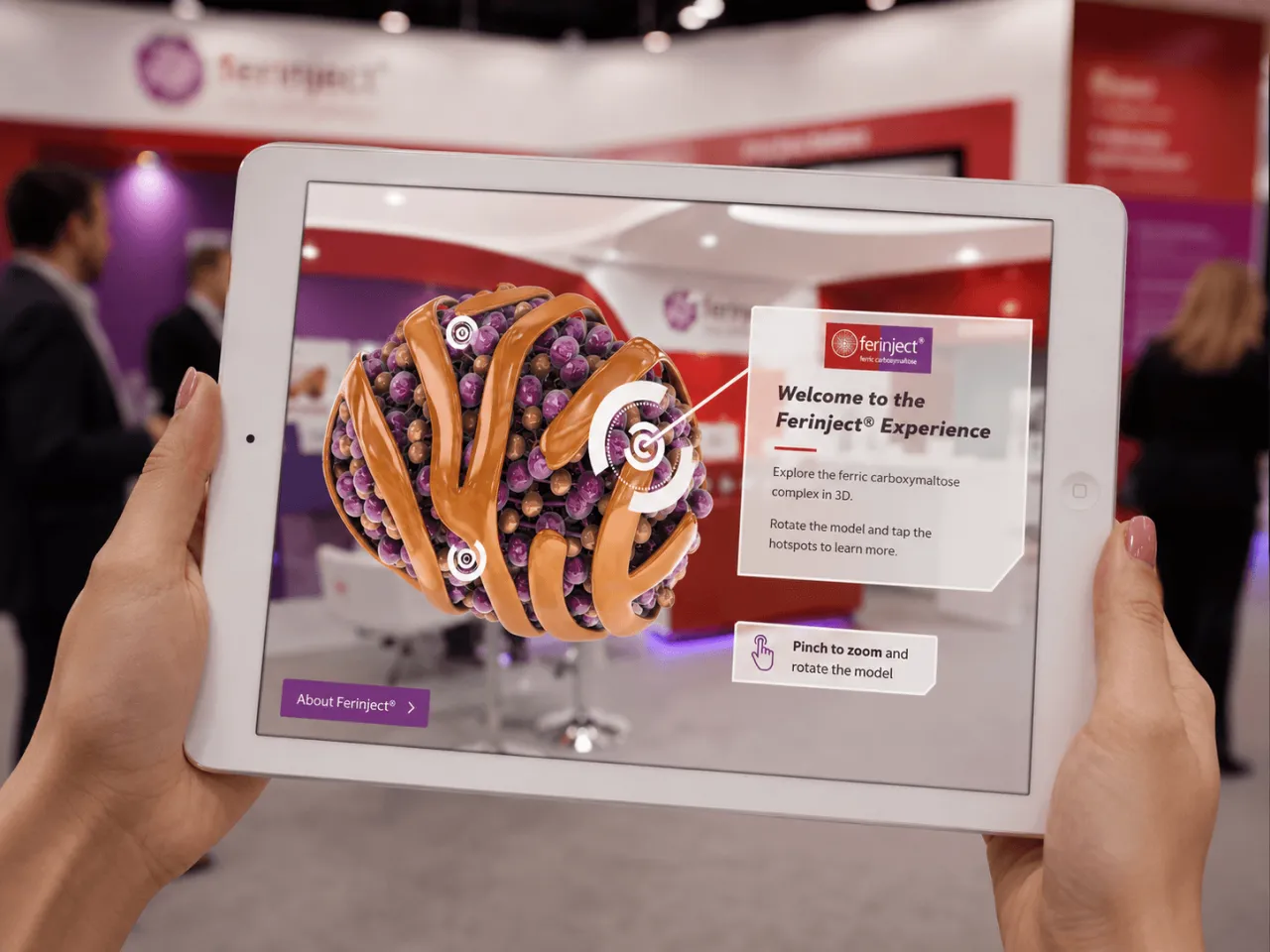
Ferinject® needed a clearer way to explain a complex scientific story in a busy event setting.
We created a three-stage mixed reality experience that guided visitors through the product at different levels of detail. AR introduced the Ferinject® complex in 3D, interactive content explained the molecular structure, and VR helped users understand how the complex supports controlled iron delivery over a managed time-frame.
Challenge
Ferinject® has a complex scientific story to explain. In an event environment, that creates a clear problem.
Visitors may only have a short amount of time on stand. The product information needs to be accurate, but it also needs to be easy to grasp quickly. Static panels and printed materials can support the conversation, but they do not always help people understand how the technology works at a molecular level.
The challenge was to create a simple, structured experience that could attract attention, explain the product clearly and give the stand team a stronger way to start meaningful conversations.
Solution
We developed a three-stage mixed reality journey using AR, VR and interactive evidence content.
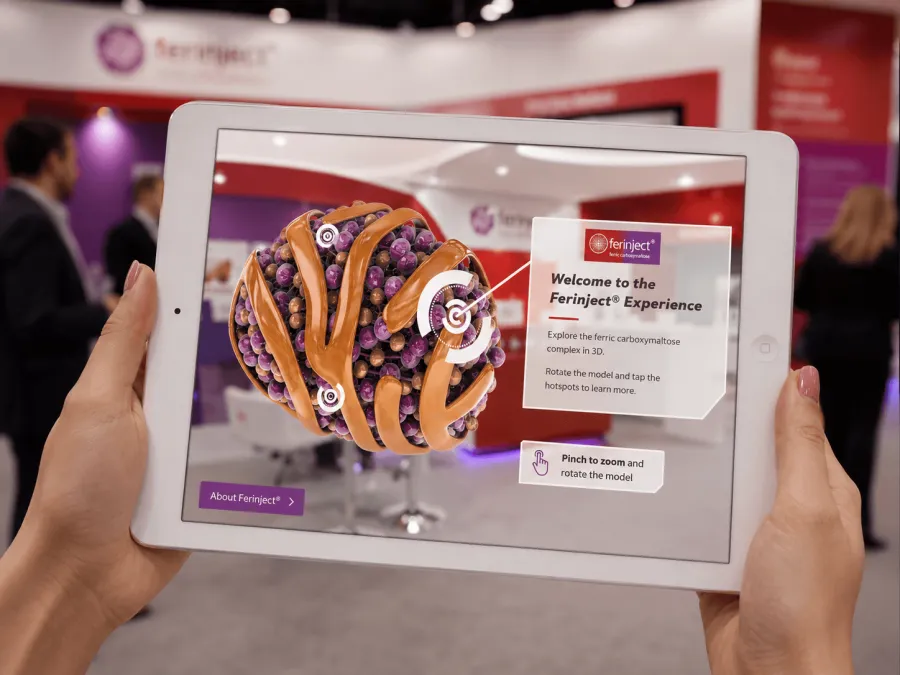
The experience was designed to move visitors through the story step by step. First, they were introduced to the Ferinject® complex through a tablet-led AR experience. They could rotate, zoom and interact with a 3D model, using simple callouts to understand the structure of the product.
The second stage took the user closer into the molecular story, showing how the ferric carboxymaltose complex is constructed and why the delivery system matters.
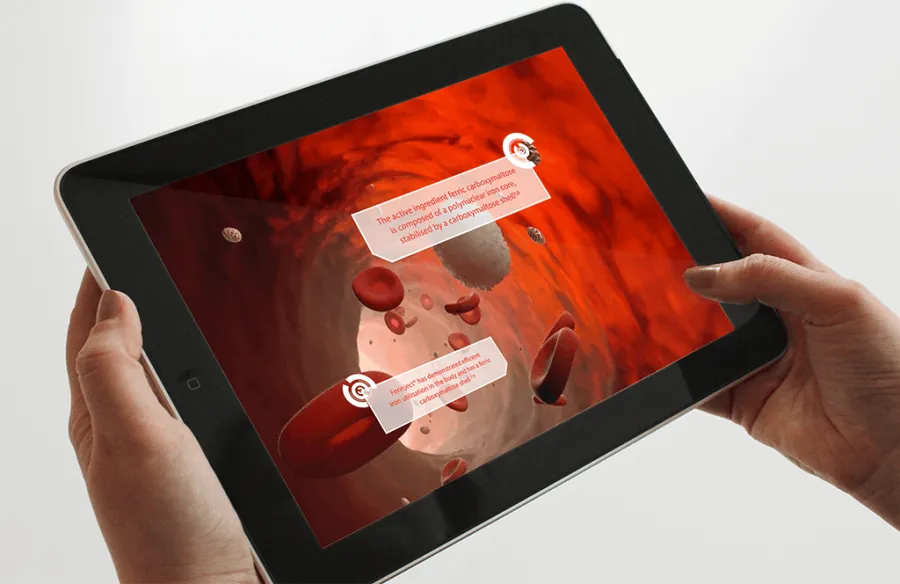
The final VR section placed the visitor inside a stylised bloodstream environment, helping to explain the role of the protein complex in supporting controlled, consistent iron delivery over a managed time-frame.
Stand concept
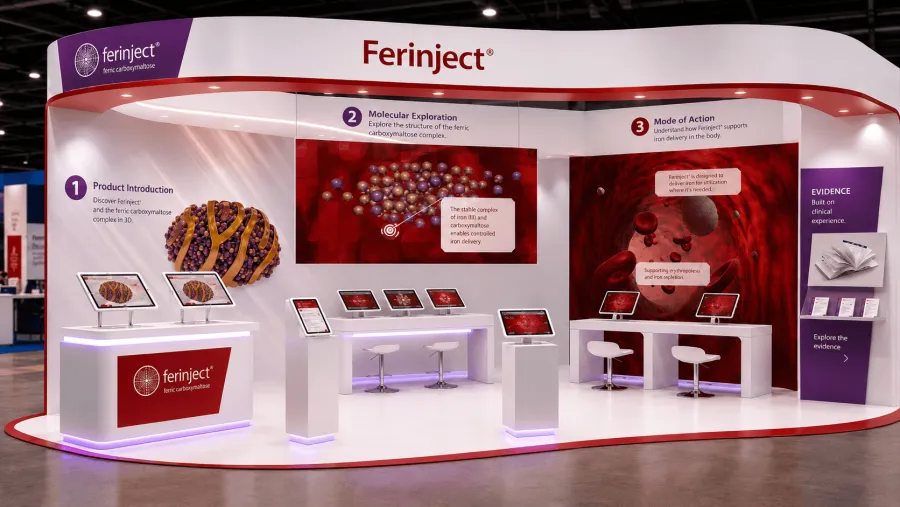
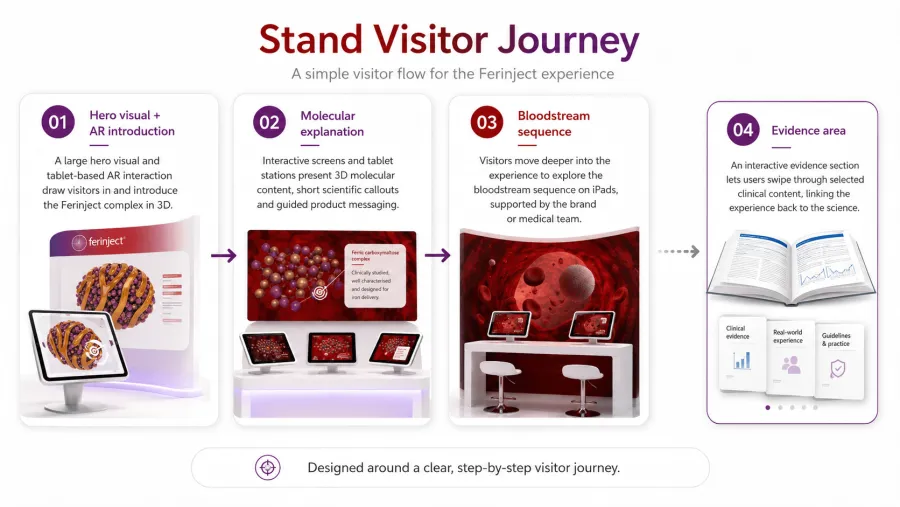
The theoretical stand was built around a clear visitor journey.
At the front of the stand, a large hero visual and tablet-based AR interaction would act as the main draw. This would give visitors an immediate, visual introduction to the Ferinject® complex.
The centre of the stand would focus on the molecular explanation, with screens or tablet stations showing interactive 3D content, short scientific callouts and guided product messaging.
A more focused VR area would sit further into the stand, giving visitors space to experience the bloodstream sequence with support from the brand or medical team.
Alongside the main experience, an interactive evidence area could allow users to swipe through selected clinical content, using the open-book visual style shown in the supporting collateral. This would help connect the immersive experience back to the clinical information behind the product.
Result
The mixed reality experience turned a complex product story into a clear, structured visitor journey.
The stand experience was built around 3 connected stages, giving the team a simple way to move visitors through the science without overwhelming them. The AR interaction created an immediate entry point, the molecular section added product detail, and the VR sequence helped explain the delivery story in a more memorable way.
The experience gave the stand team:
3 interactive touchpoints across the visitor journey
A target engagement time of around 5 minutes per visitor
A clear route through AR, molecular exploration and VR
A practical way to explain the product beyond static panels or printed evidence
A stronger conversation starter for healthcare professional engagement
By combining immersive content with short, focused messaging, the experience helped make a technical subject easier to understand on stand. It gave visitors something to see, touch and discuss, while giving the team a more confident way to explain the science behind Ferinject®.
Frequently Asked Questions
Want to learn more? Get in touch