On 18 November 2026 nginx, the web server that sits in front of a large share of the world’s websites, released fixes for a set of critical flaws. The most serious had been in every release since 2015 and needed only HTTP/2 to be switched on. The next day PHP released security updates for every supported version, including fixes for flaws that could let an attacker run code on a server. It had fixed two others of the same kind in October.
Most of the serious flaws need an unusual setup to exploit, and no attacks using the nginx flaw had been confirmed when its fix came out. Even so, every organisation with a product built on PHP had the same two questions that week: which of ours are affected, and who is updating each one?
We look after a portfolio of live web applications, some our own and some our clients’, so those questions come to us. Since 11 September 2026 the EU Cyber Resilience Act has also put a clock on them. For a product the Act covers, an actively exploited vulnerability needs an early warning to the authorities within 24 hours and a fuller notification within 72.
We have written about what the Act means for your digital product and about who looks after an app once it has launched. This insight is about what we did in our own studio: how we built compliance monitoring into myHarmony, the system we use to run our projects, and what we changed after the first version.
A check that depends on someone remembering
When a vulnerability is announced, the question is simple: are any of our products affected? Somebody has to open each project, lists every package and the version in use, compare each against the latest release and the published vulnerabilities, then check whether the versions of PHP and Laravel underneath are still supported. They do that for every project, and again the next day, because new flaws are published daily.
Inside the system we already use
myHarmony is where our projects, tasks and time live. We built the monitoring there because the people who have to act on a security warning are developers, and they open myHarmony every day. A separate compliance product would have been one more place to sign in, and the warnings would have sat in it unread.
Every day myHarmony reads the list of packages from each repository. Developers change nothing about how they build or release. It compares what it reads with public sources: the registries where packages are published, for the latest version of each; a database of known vulnerabilities; and the published end-of-life dates for PHP and Laravel. Nobody types in a version number.
A to-do list for developers
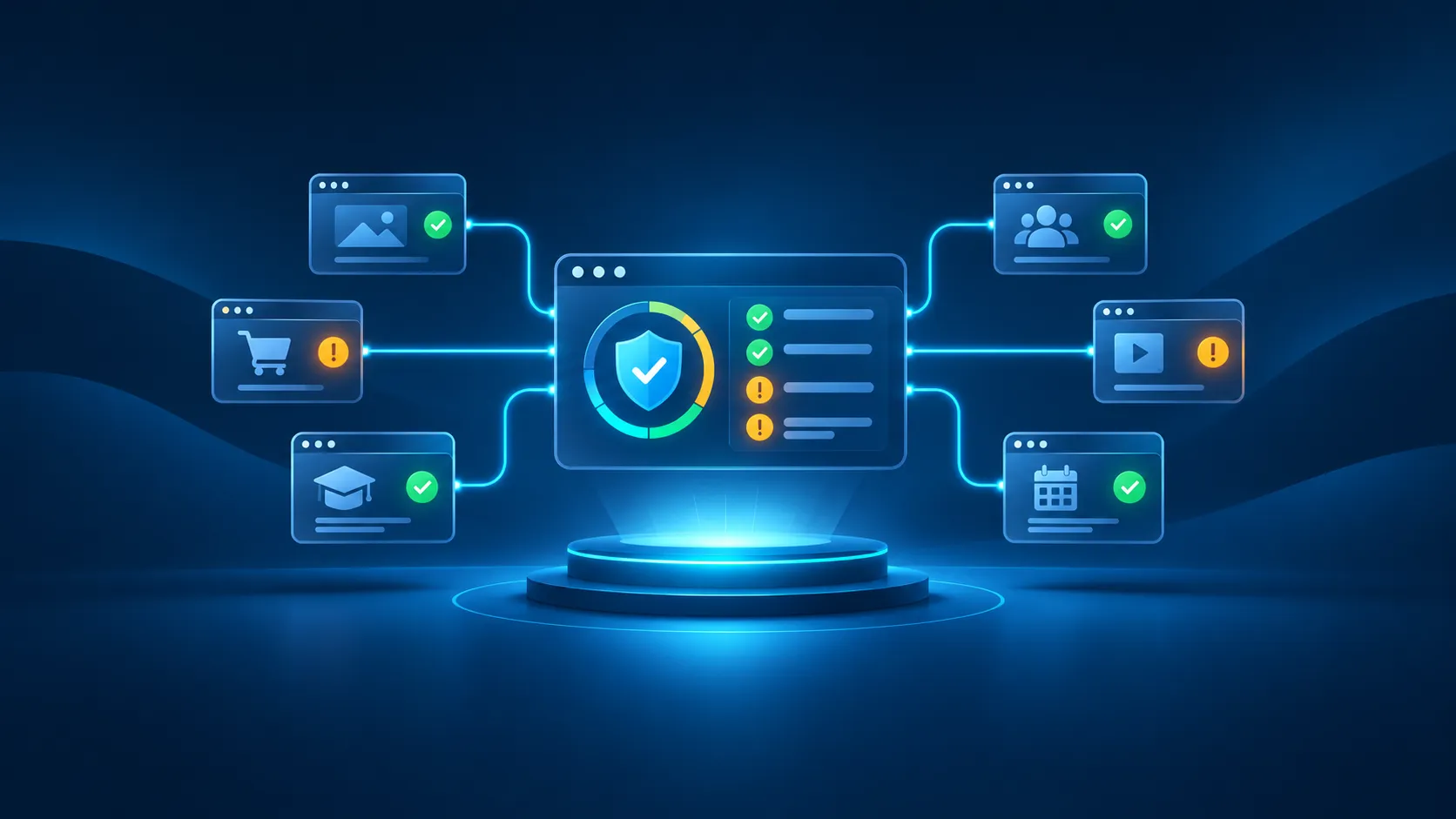
A developer who signs in sees a panel on their dashboard called “Updates needed”. It lists the products they lead, the worst first, and each line is an instruction: “Update laravel/framework 11.9 → 13.8”, or “PHP 8.1 is end of life”. Where a package has a known vulnerability, the line names it and the version that fixes it.
The panel uses no security vocabulary. Each product has one lead developer and only that person is told about it, inside myHarmony unless they ask for an email as well. They make the update, push it and press Refresh. The line goes.
The system writes the record
When myHarmony can prove that the version in use is one the vulnerability affects, it opens the vulnerability record itself, notes which product is affected and attaches the package list as evidence. When a later reading shows the fixed version, it marks the product as fixed and closes the record. The developer never fills in a form.
Where it cannot prove the match, it does not guess. The warning goes to a person to decide and stays off the developer’s list until they have.
What November’s fixes showed
The nginx and PHP fixes are installed on the server, not in a product’s code. myHarmony reads package lists, so it cannot tell us whether a particular server has been patched. Somebody still has to check that.
What it holds is the list to check against: every live product, where it is hosted, which version of PHP it is built for and who leads it. In a week like that one, working out what you have is usually the slow part, and it was already written down.
The week also showed why the end-of-life line is on the panel. PHP 8.1 and older received no fix from the PHP project, and PHP 8.2 stops receiving them on 31 December 2026. A product on an unsupported version has no official patch to install. It has to be moved to a newer version of PHP first, which takes far longer. The panel shows that line while there is still time to plan the move.
Where a person still decides
myHarmony holds what data each product collects and who processes it, incidents, risk assessments and the documents clients ask us for.
Anyone on the team can report a problem through a short form that does not expect them to know the regulations. Whether something must be reported, whether a risk is accepted and whether a document goes to a client are each approved by a named person.
It also never says a product is “compliant”. It holds readiness checklists for the Cyber Resilience Act, UK and EU data protection law and Cyber Essentials. Each requirement is either answered by a record somebody approved, or marked as needing a person. Finishing the Cyber Essentials checklist is not a certificate: only an award from the certifying body shows as certified.
What we changed after the first version
The first version worked, and it was hard to use. It assumed everyone knew the vocabulary. One screen asked “Who are the parties?” and offered “Manufacturer” and “Subprocessor” with no explanation. The overview was a long page of panels with nothing to say where to start, and several of the lists behind it were the same list under two names.
So we rewrote it for somebody who is not a specialist. Every option has a description in plain English. The overview opens with four situations: “Report an issue”, “Something changed”, “Help me choose what applies” and “Browse all tools”. The duplicate lists were merged.
The dependency monitoring changed most. Our first plan had a person confirm each match, and a task raised for each update. Both steps were work that added nothing when the match was already proven, so we removed them.
What it changed for us
“Are any of our products affected?” is now answered by opening a page. The record of what was found and fixed exists without anyone writing it. The time developers give to this goes on the update, which is the part that needs a developer.
Four decisions made that possible. The facts come from the code, not from a form. Each instruction goes to one named person, in a place they already look. A machine keeps the record where the answer can be proven. A person decides everywhere else.
Does a check in your organisation depend on someone remembering?
It does not have to be about security. Most organisations have a routine check that matters, belongs to nobody and gets done when there is time. Tell us which one it is. With Systems and automation we work out with you what a system could collect and record by itself, and where your people should still make the decision.

About the author
Alex Hollyman
Services
Your idea
Talk it through with us
Tell us what you are working on, from an early idea to a brief that is ready to go, and we will think it through with you.