Growth is usually told as a sales figure. Inside the organisation it is felt as work. Every new store, retailer and country brings its own prices, language, currency and tax, and somebody has to keep all of it right.
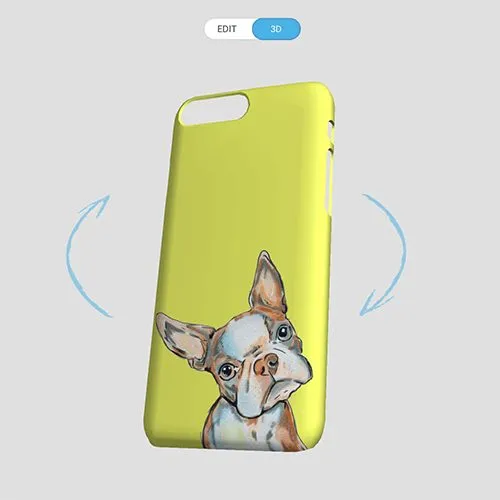
With Case Station we built the kiosk and the system behind it that led to the sale of over 280,000 custom printed phone cases, through 130 kiosks in the UK and more abroad, China included. The case study covers what we built. This insight is about what growing asked of the organisation, the two problems that came with selling abroad and what its people were free to do once the system carried the load.
The work grows faster than the team
Case Station sells phone cases printed with the customer’s own design. Together we created a kiosk for retailers’ stores, where a shopper designs a case from their own photos and orders it there and then. Each kiosk that opened added sales.
Each one also added things to look after. A store has prices and a currency. A country has a language, tax rules and delivery. Artwork is licensed for some places and not for others. New phones come out through the year, and each one needs a case on sale while people are looking for it.
When that is managed by hand, the work lands on the people who are best placed to grow the organisation. The person who should be talking to the next retailer is updating prices, and the person who should be helping a customer is chasing an order. Growth then slows for a reason that has nothing to do with demand.
One place to run every store
With Case Station we built one back office that every kiosk takes its instructions from, and one app that runs on all of them. A new store was copied from one that already worked. A new price or voucher was entered once. Selling in a new country was a matter of settings and translation.
The aim was that adding a store, a retailer or a country would cost very little time or budget, so that the size of the team did not decide how far Case Station could grow.
Changing a business while it is trading
A system like this is not delivered once. Case Station kept changing as it grew: more retailers, an app for shoppers to order from home, more countries, new rules for card payments in Europe and new kinds of case. We worked alongside its team through each of those.
Two habits made the change manageable. The first was to add each step to the system the stores were already using. Nobody had to learn a replacement in the middle of a busy period, and nothing was switched off to make room for something new.
The second was to let people work in tools they already knew. Prices, translations and vouchers could be exported to a spreadsheet, changed there and imported again, so a large update did not mean typing every change into a form. Kiosks collected changes by themselves within the hour, so nobody travelled to a store to update one.
The first problem abroad: distance and delay
Every sale ends with the kiosk uploading a full-size image of the design to be printed. At first all of those images went to one Amazon Web Services (AWS) region, in Ireland. For stores in the original European region that worked well.
Further away it did not. The latency of sending a large file across the world made uploads slow and prone to timing out, just after a customer had bought something. The staff in a store cannot fix a problem like that, and it gets worse with every country added.
Together we solved it in the system. We added storage in 15 regions round the world and gave each store the one nearest to it, so a store in Australia uploaded to Sydney. We did this when the distributed systems that are common today were still in their infancy, so placing each store’s uploads in the right region was something we designed and built with Case Station. After that, distance was no longer a limit on where it could sell.
The second problem abroad: the Great Firewall of China
China is one of the largest markets for phones in the world, and one of the hardest for an organisation from outside to sell in. Behind what is known as the Great Firewall, many of the services a system relies on elsewhere cannot be reached, and connections out of the country are slow and unreliable.
So the system for China was hosted inside China, on AWS. AWS in China is a separate service from AWS everywhere else: Chinese companies operate it, it needs its own account and nothing is shared with the other regions unless you build the link yourself. The kiosk ran in Chinese and offered only the artwork licensed for sale in China. Where a service the app used elsewhere could not be reached, a Chinese one took its place.
That opened the Chinese market to Case Station with the same kiosk, without a second version being built for it.
What the system took off people’s desks
Much of the routine work of running stores in several countries stopped needing a person.
Orders
An order went from the kiosk to print without anyone typing it in again.
Prices and vouchers
A change was entered once and reached every kiosk it applied to within the hour.
New phones
A case for a new phone went on sale in every store without a new version of the app.
Sales from every store were in one place, and a retailer’s own staff could sign in to see how their stores were doing.
What people did with the time
This is the change we would point to first. With the system looking after stores, prices and orders across the world, Case Station’s people could give their attention to their own jobs.
They could spend their time on new business, finding retailers and agreeing where the next kiosks would go. They could do the human side of selling, in front of a retailer or a shopper. And they could look after customers properly when an order needed a person.
A system should not do that work, and people do it badly when they are also keeping prices right in several countries.
What we take from it
The technology on this project was a kiosk app, a back office and storage round the world. The change it made was in what Case Station’s people spent their day on.
A few things made that possible, and they apply well beyond kiosks. We looked with Case Station for the work that multiplies with every new store and put it in the system first. We fixed the problems of place, such as latency and blocked services, once in the system and not store by store. And we made each change a step on from what people already used.
Is growth adding more work than sales?
Tell us where the work is piling up as you grow, and what your people would be doing if it were not. With Digital Solutions we work out with you what a system could take on, and build it in steps your team can absorb.
See what we built with Case Station
The case study covers the kiosk, the back office, the storage regions and selling in China. Its map shows an upload to a nearby region racing one to Ireland.
Read the story
About the author
Alex Hollyman
Sectors
Services
Your idea
Talk it through with us
Tell us what you are working on, from an early idea to a brief that is ready to go, and we will think it through with you.